In recent years, contemplative pedagogy has emerged as a promising approach to foster confidence, creativity, and community in higher education. This article explores insights from a gathering at the Contemplative Pedagogy Network Symposium held in Totnes, Devon, UK in September 2023. The authors discuss the importance of slowing down, embracing silence, and creating spaces for authentic connection in academic settings. A contemplative perspective on learning and teaching moves beyond traditional knowledge transfer to encourage embodied learning and deeper engagement with subjects, feelings, and ideas. The metaphor of a “wild pond” is used to illustrate the expansive and interconnected nature of this pedagogical method, challenging conventional academic norms and fostering transformative educational experiences.
Written by MIchael Wride, Chiara Cirillo and Rosie Holmes | PUBLISHED ON 21st June 2024 | Photo by Valeriia Miller on Unsplash
Transcript
Hello and welcome to this talk regarding a gathering that. was held at the recent Contemplative Pedagogy Network Symposium in Dartington Hall, Totnes, Devon, UK in September 2023.
The title of the symposium was contemplative pedagogy in higher education, growing confidence, creativity and community. We gathered on the first evening to discuss this topic. The title of this particular presentation is The Gathering at the Wild Pond. I would like to acknowledge the help in taking notes during our discussion of Chiara Carillo and Rosie Holmes, fellow members of the Contemplative Pedagogy Network Steering Group.
Introduction
To give you an overview of the talk, I’ll provide an introduction explaining the way we gathered together on the first evening. We had initially thought that we might like to present this as a ‘fish bowl’, but we decided that it would be a better approach to couch this in terms of gathering at a wild pond. We also discussed issues around the importance of slowing down in higher education, the importance of sound and silence and the balance between the two.
How do we facilitate community and connection? How do we gain confidence, and how do we carry out acts of courage and encouragement? In the realm of higher education, contemplative pedagogy is gaining traction as a means to foster confidence, creativity and community among both educators and students. The conversation we had at the symposium touches on the importance of understanding the ‘why’ behind teaching the ethical and qualitative aspects that go beyond mere knowledge transfer.
It’s about deepening the engagement and relationships, connecting more profoundly with subjects, people, feelings, ideas and passions. This depth is often achieved not through speaking but through listening both to ourselves and others, allowing silence and space to break free from habitual patterns and foster genuine innovation and insight. The metaphor of the swan gracefully paddling beneath the surface serves as a reminder that often less is more. It’s not about the frantic paddling below, but about engaging with deeper qualities, slowing down, creating space and embracing the values of spaciousness that are essential for both colleagues and students.
Embodied learning is a key aspect, encouraging a shift from purely intellectual exercises to those that involve the heart and all the senses, feeling with the feet and sensing with the knees. Building trust is paramount in this process as it lays the foundation for a safe and supportive learning environment. This approach aspires to cultivate embodied qualities and a deep sense of connection, moving beyond the instrumental and into the realm of meaningful, transformative education.
The discussion continues to evolve, exploring the layers of this pedagogical method and its potential to reshape the landscape of higher education. Our mantra: confidence blooms where space is tended.
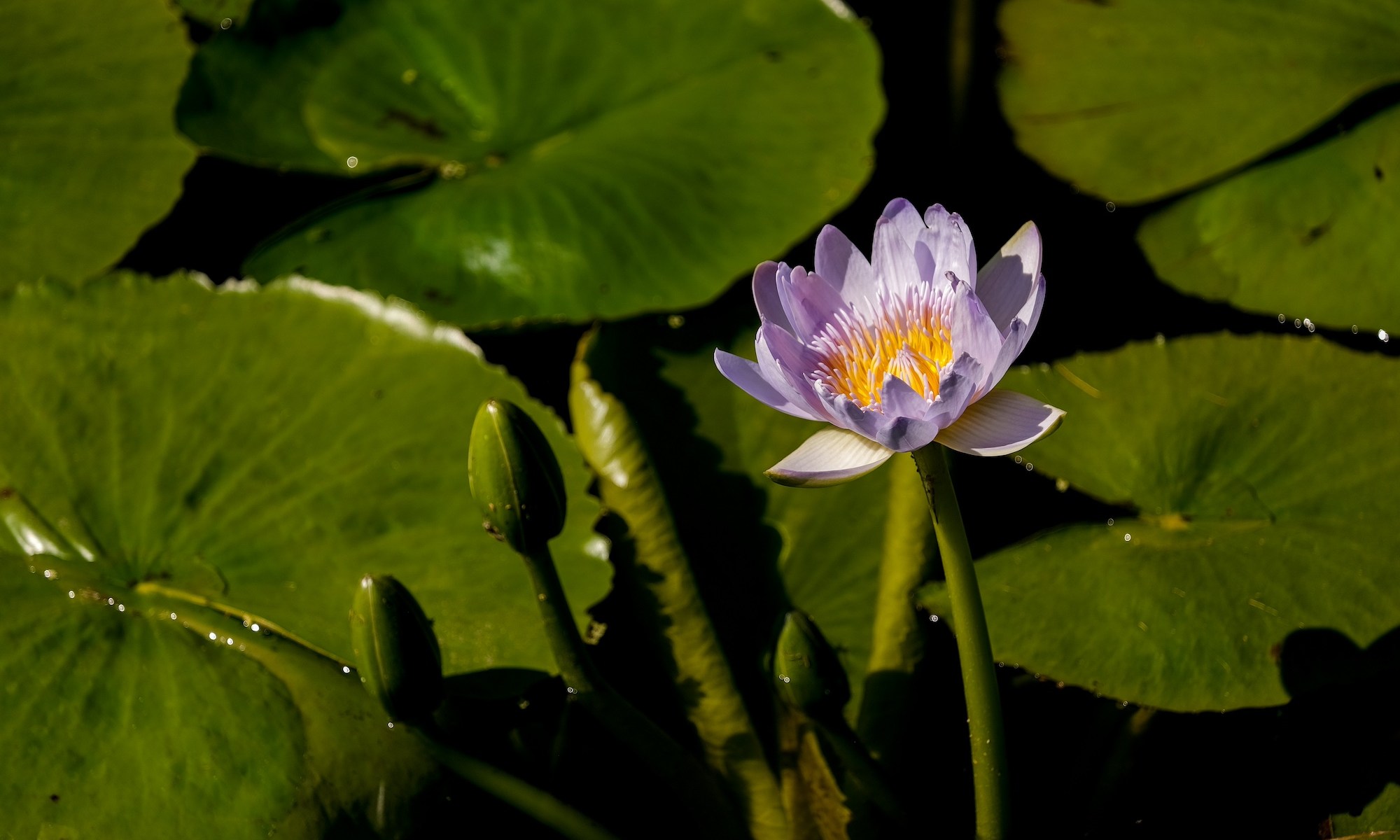
I’d like to introduce the idea of the wild pond as a contemplative journey. Our contemplative exploration of slowing down, silence, and its multifaceted dimensions was both thought provoking and resonant. First of all, I’d like to tease out the difference, I suppose, between the wild pond versus our initial idea of the fish bowl. The metaphor of a wild pond beautifully captures the idea of expansiveness, freedom and interconnectedness.
Unlike a fish bowl, which confines and isolates, a wild pond invites exploration and embraces diversity. As contemplatives, we can cultivate our inner wild ponds, allowing ideas, experiences and connections to flow freely. As the metaphor unfolded, we gathered by the water’s edge, shedding our preconceptions. The wild pond whispers secrets of interconnectedness, freedom and expansiveness. No longer confined to glass walls, we immerse ourselves. Our questions become ripples, expanding outward.
Slowing down
Contemplation is not a mere turning inward. It’s a plunge into the heart of existence. It represents a change in our habits, away from the fast and the furious mode of academia into greater depths. Going beyond the dichotomy of inward versus outward, we explored a deeper engagement with subjects, feelings and passions. Our knees sense the ground. Our feet are rooted in reality, immersing in body and understanding. This resonates with the essence of contemplative practise, a slowing down to be fully in the present moment.
Perhaps it’s about connecting with the heart, the gut, and indeed even the knees – sensing and embodying knowledge beyond mere intellectual understanding. This requires some resistance to the status quo and power hierarchies. It requires resilience and awareness and move away from and beyond the instrumental, so inhabiting these loose spaces becomes a subversive act. Regulations and timetables are shackles. But we yearn for loose spaces where creativity pirouettes. Slowing down is our manifesto. Power, tenure are mere illusions. Subversion lies in the calm inbox where emails wait their turn.
Sound and silence
Let’s consider silence as a creative space. Silence, often undervalued, holds immense potential in its ‘not emptiness’. Rather, it’s a fertile ground for creativity, reflection and transformation. The space between notes and music exemplifies this silence enhances the impact of sound. Just as pauses in conversation allow for deeper understanding in everything is connected. The power of music. Daniel Barenboim says that the last sound is not the end of the music. If the first note is related to the silence that precedes it, then the last note must be related to the silence that follows it.
In academia, silence is scarce. In academic settings, the pressure to speak up often overshadows the value of thoughtful silence. How can we create spaces where silence is not only allowed but also celebrated? Can we integrate it into our teaching practises?
We need courage, and there will be consequences. In contemplating silence, we honour its richness and recognise that it’s not absence but presence in a different form. Once again, in the heart of academia, where the currents of knowledge flow, there lies a pond, a wild pond. This pond ripples with life, inviting contemplatives to explore its depths.
Silence is indeed the creative canvas. Silence, often dismissed as emptiness, is pregnant with possibilities. It’s the space between notes, the pause before revelation. The pressure to speak drowns out its subtle melody. Yet it’s here that creativity thrives. Keith, our fellow contemplative, bursts into song, a courageous contribution unfolding from the silence. His voice echoes across the pond, disrupting the calm but adding a new vibrancy to our gathering.
Silence, too, has power. The sound is the pebble dropped, creating concentric circles. It’s the courage to allow for quiet, just as it is the courage to sing. There is a symphony of sound and silence. We need both. The song stands out against the backdrop of the quiet. Can we teach silence? Can we normalise its presence in our classrooms? Perhaps it’s the missing note in our educational symphony.
So what are our society’s preferences? Loud versus silent. Society favours assertiveness. The loud, the assertive. But the swan knows otherwise. Silence isn’t absence. It is presence in a different form. It’s the language of the heart, the gut, the whole body. And so we sit by the wild pond, listening to its stories to our stories. We honour silence not as a void but as the canvas upon which our contemplations unfold.
Community and connection
Now we turn to community and connection. A metaphor here is regarding threads of authenticity, which can be woven between community and contemplation. In the quiet alcoves of academia, where ideas interlace like ivy, we gather a symposium of seekers, our canvas community relationship and contemplation.
So let us unravel the tapestry. We are on a quest for authentic community. Community is a beacon on the academic horizon, but mere proximity doesn’t suffice. We yearn for authenticity. How? By forging bonds beyond the water cooler chat. By seeing colleagues as fellow travellers rather than mere cohabitants. We’re talking about the alchemy of authenticity. We’re talking about authentic relationships, which are our philosopher’s stone. They transmute solitude into community fear into courage and mundanity into creativity.
Our symposium: a web spun by like-minded folk, each thread a connection, each node a spark. We discussed how PhD students – the fledgling contemplatives – need sanctuaries, spaces where vulnerability is a passport. They need safe spaces for learning. Here they learn not only from textbooks but from each other’s scars and whispered dreams. Peer learning is the hidden elixir. PhD students thrive when allowed to be themselves. Peer learning is the secret potion. How much of it do we consider in our pedagogy? Can we blend it into the mortar of our classrooms? What about organic networks? The roots and the shoots? Networks sprout organically like wildflowers after rain. Formal meetups are the sturdy trunks, informal connections, the delicate tendrils.
But how do we make virtual spaces authentic? There’s a challenge to balancing solitude and togetherness. Some crave community. Others seek solitude. How do we bridge this chasm? In every room, desire and intention converge. Some stretch in shavasana. Others sprint on treadmills. What is the art of authenticity? It is the compass guiding our presence. We set the space like a potter moulding clay. There are loose principles, not rigid rules. Frames for our canvas.
Creativity, confidence and encouragement
Creativity thrives within these bounds. Confidence has undercurrents. Confidence isn’t bravado, its permission and possibility. Life unfolds organically, trusting each other within our communities. We begin to know the contours of our souls, and this underpins our collective confidence. We have the challenge of navigating unfamiliar waters. Authenticity does require courage. We step into unfamiliar spaces, feeling awkward yet alive.
Discomfort is our companion. Like a loyal dog. We attend to it, making it part of our safe harbour. And what of the virtuous circle of wisdom? Virtual circles spin when someone feels safe to speak. Courage, blooms, silence, discomfort. They’re not void their fertile soil for collective wisdom, and so we weave threads of authenticity shimmering in the light of shared vulnerability.
Now I turn to acts of encouragement, the dance of uncertainty, the nurturing of courage and active absence. From the hallowed halls of academia, where equations hum and ideas pirouette, we gathered at Dartington Hall, a symposium of seekers. Our theme: courage, uncertainty and the spaces in between. Let us step on to this stage. We’ll consider acts of encouragement. Courage, like a hidden feather that suddenly appears, waits for its cue. It thrives on encouragement. Courage breeds courage, they say.
So we pass the torch, igniting sparks in each other’s eyes. There is intelligence in the silence. The white feather whispers secrets. Intelligence too, seeks expression. There is intelligence within the silence. The white feather appeared at the beginning of our gathering in the centre of our circle. We invite it to dance an interactive waltz.
Thinking is a brave waltz. Certainty is a mirage. Our work lacks step-by-step instructions. Instead, we navigate fog, holding space. Therein lies courage. The chairs before us empty yet expectant, await revelation. We can also consider the way we process ideas. A neurodiverse canvas. Confidence blooms when ideas find room to breathe. Neurodiverse students need this air. Tentative thinkers, like fragile butterflies need space. Can silence cradle their wings?
Let’s consider mindfulness and the frightened eyes. A friend’s PhD, a tale of intervention. Mindfulness met frightened eyes that couldn’t close. Not all students are learning ready. Some carry worries like heavy stones. The worry tree provides a finite respite. We invite learners to put worries down, if only for a breath. The worry tree stands tall. Young teens whisked away from the crowd find solace. Their minds, once active, now inhabit uncertain spaces.
Education as transformation
Education should be transformation, not a goal. Education as transformation, not a goal. Education is the alchemy of souls. Not a goal, but a journey. The classroom, the lecture theatre, the tutorial, the lab a crossroads where students learn from each other. Complex problems await. There are hurdles to leap, stepping stones to navigate. We can embrace choice. We can nurture confidence and space.
In the quiet corridors of academia, where confidence waxes and wanes, like the moon, educators gather to explore the art of teaching. Here we weave a narrative of possibility, a tapestry of choices and spaces where voices emerge. Confidence has shifting tides. It is elusive as a fleeting breeze. It dances differently for each soul. It wears disguises bold one day, timid the next.
Our task: to provide the stage where these inner actors can express themselves. Choices can be unfurled. Imagine a classroom, an open field of options. We plant seeds of choice, allowing them to sprout organically, no top down dictums. Instead, we offer pathways like sun dappled trails through a forest, perhaps towards a pond. The nonjudgmental canvas is here. Our canvas is not judgmental space, a sanctuary where vulnerability blooms. How do we create it, perhaps by listening without labels by allowing silence to stretch its wings.
Meditation is a quiet revolution. We, too, embarked on a journey. Staff meetings can be transformed into oases of stillness, meditation, the art of meeting oneself, becoming our shared secret. A quiet revolution. We can open the spaces. We can gain confidence. When we do, we unlock doors. We dismantle walls.
Possibility tiptoes in, whispering. Colleagues are often masked in professional veneers, yet hunger for authenticity. Can we reveal more of ourselves? But there’s sometimes a variable response to silence. Meditation, like a wild bird, lands differently on each shoulder. Some embrace it, others resist. Our one size fits all approach falters. Can we tailor our findings to the soul’s contours? Can we teach beyond uniformity? Let’s discard the mould. Instead, invite students to bring what they need. In this room, diversity thrives.
In summary, I provided an overview of our process of slowing down. We’ve explored sound and silence. We’ve explored community and connection. How can we gain confidence and acts of encouragement? And so we sway between certainty and doubt, courage and silence. Our symposium, a dance of fluttering ideas, seeks not outcomes but transformation.
Thank you.
The script for this presentation was developed from the notes taken during the Wild Pond session at the Contemplative Pedagogy Network Symposium, Totnes, Devon in September 2023.
 JUICE
JUICE 